












The Socceroos’ 2-0 FIFA World Cup victory over Türkiye in their group stage opener was significant for more than just the result, and new research from globally-renowned football intelligence company Twenty First Group demonstrates exactly why.
When Tony Popovic’s side took to the field for their tournament opener, the average age of the team was 24.6, making them the youngest starting eleven of any nation at the 2026 FIFA World Cup.
In fact that number is one-and-a-half years younger than the next-youngest team at the tournament and, incredibly, four years younger than Australia’s average age at the 2022 World Cup in Qatar.
TRANSFER CENTRE: Isuzu UTE A-League 2025-26 End of Season exits: Your club’s moves
It’s a statistic that highlights just how quickly Australian football has changed.
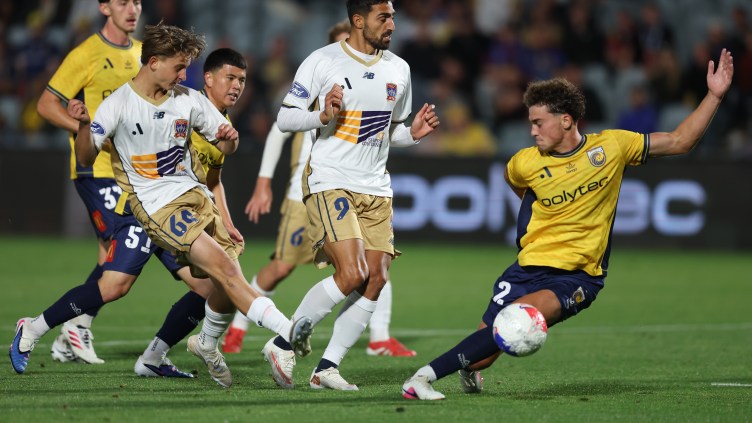
Over the past few seasons, A-Leagues clubs have increasingly put their faith in youth, creating a pathway that is now feeding directly into the national team setup.
According to research from football intelligence company Twenty First Group (TFG), under-23 players accounted for 31% of all minutes played across the Isuzu UTE A-League during the 2025-26 season.
That represents an increase of around 50% compared to just three years ago and places the competition among the world’s leaders when it comes to opportunities for young footballers.
Furthermore, the figures compare favourably with some of football’s biggest leagues.
TFG’s analysis found Isuzu UTE A-League clubs handed around one-and-a-half times more minutes to U23 players than the average across Europe’s top five competitions, while Australia’s top flight also comfortably outperformed Japan’s J1 League when it came to youth exposure.
The impact is beginning to show.
Globally, Australia now ranks 23rd when it comes to the strength of its top 20 under-23 players, according to TFG’s research, compared to 36th for its senior player pool.
For clubs, the benefits extend beyond what happens on the pitch.
As transfer fees for emerging Australian talent continue to rise, player development has become one of the league’s most valuable assets. TFG estimates that major youth transfers can now generate more than four times the value of a club’s annual central distribution payment.
RACE TO GLORY: Predict the results as Australia & New Zealand play on the global stage in North America
DOWNLOAD: Be the first to know who your team is facing in Round 1. Only on the A-Leagues App
The growing reputation of Australia’s talent pathway has also helped attract international interest, with several multi-club ownership groups already investing in Australian football and others monitoring the market closely.
Furthermore, with A-Leagues graduates now regularly playing for big clubs in Europe, North America and Asia, these statistics highlight the importance of what has now been more than a decade’s worth of investment from clubs into their academies.
For the Socceroos, however, the most immediate reward is evident on the world stage, with Melbourne City goalkeeper Patrick Beach and Sydney FC midfielder Paul Okon-Engstler proving their worth in the brilliant win over Türkiye.
From the A-League to the FIFA World Cup, Australia’s next generation is no longer waiting for its opportunity.
It’s already here. And they’re taking it with both hands.