












Did anyone see this coming?
At the halfway point of the Isuzu UTE A-League season, arguably the two biggest clubs in the land – Melbourne Victory and Sydney FC – find themselves in a rut.
Victory sit rock bottom. Sydney aren’t far off, either. To say this season hasn’t gone to plan is almost an understatement – there’s no sugarcoating it.
Their respective seasons have deviated and dovetailed far away from pre and early season expectations. Most saw these two sides right in the heart of the finals race, with some suggesting they were among the favourites for silverware this season.
And while the 2022-23 campaign is still far from over, both teams know that if they are to resuscitate their campaigns it has to start now.
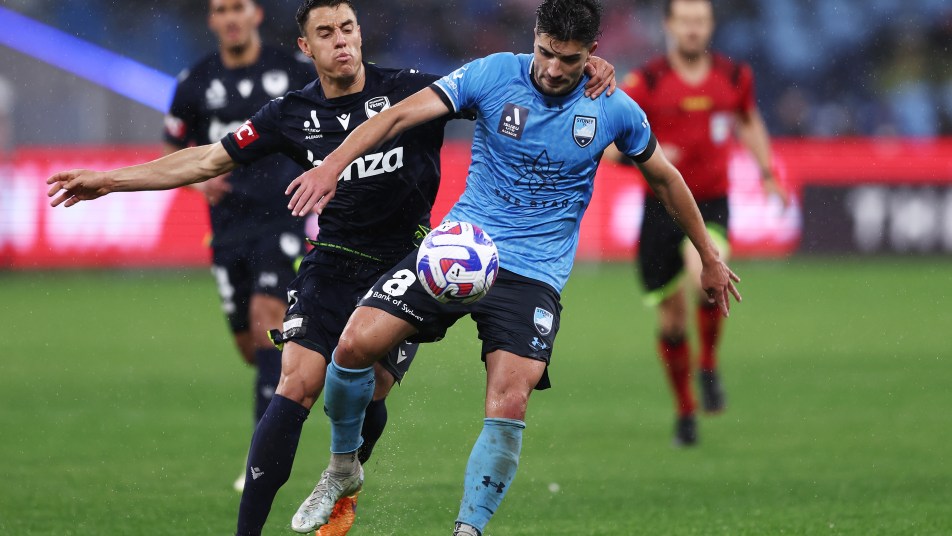
The two teams face off this Thursday in the second Big Blue of the season, and a win for either team could provide the boost they sorely need heading into the second half of the campaign.
But how did both teams end up in this position? KEEPUP takes a look at the numbers behind a difficult first half of the season for Victory and the Sky Blues.

Melbourne Victory
Victory were the popular pick among pundits and fans alike to continue their rise up the table in season two of the Tony Popovic era.
In his first season, Victory went from the historic low of winning a first ever wooden spoon to Australia Cup (then the FFA Cup) winners and Isuzu UTE A-League semi-finalists within the space of 12 months.
Many expected the upward trajectory to continue with most of the squad retained, coupled by the signing of Portuguese star Luis Nani to bolster their already high voltage frontline.
Fans had every reason to believe that this was Victory’s season.
And after both sides met in an end-to-end barnstormer in the first Big Blue of the season back in Round One, the expectation was that things were heading in the right direction.
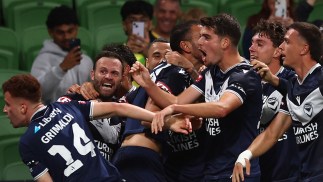
Despite conceding twice, Victory’s resolve was there. They battled back from an early deficit to regain the lead and again, fought tooth and nail to take home all three points after Sydney equalised late in the game.
Fast forward to January and things couldn’t be any more different heading into the reverse fixture. Outside of the external factors that have hampered this club over the last month, there’s a greater issue on field that has plagued them now for quite some time.
Put simply, Victory just can’t find the back of the net.
Since Round One, Victory have only scored eight goals in 11 games – going goalless in six of those and only scoring more than once in one of those games (a 4-0 win over Newcastle Jets in November).
But it’s not as if Victory aren’t creating chances either.
According to Opta, Victory are underperforming their xG (expected goals) by -7.5 (18.5 xG for the season) – which is the worst xG completion rate in the entire competition. Their total xG is equal-fifth with Wellington Phoenix, showcasing that they’re in the top-half of teams for creating quality chances on goal.
On top of that, their shot conversion rate is a league worst 6%. These stats are incredible when you consider just how many top quality options Victory have in their attacking half – even without Nani (season ending knee injury) and Nick D’Agostino (departed for Viking).
Bruno Fornaroli has only scored once (a penalty) since arriving, Tomi Juric has been hampered by fitness issues, while their supporting cast – Ben Folami, Chris Ikonomidis and Jake Brimmer – have four goals combined.
Popovic has tried different combinations and formation switches (4-2-3-1 and 3-5-2) to find the best solution – but neither has yielded an uptick in results or scoring outcomes.
However, Popovic has stressed time and again that better attacking output doesn’t just fall to their attackers – but in fact, the whole team to work together as a unit.
But perhaps their Achilles heel isn’t just their lack of conversion, it’s how game state dictates their inability to get the best out of themselves.
Last season, Victory averaged 47.7% possession, and were able to control games based off their ability to not only take chances – but strike first. Essentially, they choked teams out after scoring the opener, allowing themselves to sit in a block, thrive in transition and force opponents to chase the game.

But this season, things have changed. Victory are averaging 53% possession this season, which can be put down to the fact they are chasing games more often than not.
And the numbers throughout this campaign showcase that Victory are not a team that is best suited to fighting their way back from a deficit – particularly, when sides can set up behind the ball and effectively, force Victory to try and pick their way through them.
Victory have only scored the opening goal twice this season, in wins against the Jets and Macarthur. Only once (against Sydney) have Victory wrestled back all three points – while they fought back to secure a 1-1 draw against Adelaide United a fortnight ago.
Conversely, Victory scored first 21 times last season (including finals) – with 14 of those resulting in wins and six draws. Only once did they lose after leading first, coming against Newcastle last February.
Popovic addressed it after their 3-1 defeat to Perth Glory on Saturday evening:
There’s a lot of things. We’ve lost a lot of points. We’re finding it hard recently to score first, so we’re constantly chasing the game.
“You can see we fought back in Adelaide and fought back again [against Perth]. The spirit is there. We’re just lacking those moments of quality to put an opponent away when we’re on top. We have to keep working and find that.”
This Thursday, however, shapes as a big chance for Victory to solve some of their attacking issues against one of the most porous defences in the league in Sydney – a team they’ve had their most success against going forward this season.
How they line up in attack will be the question, especially without D’Agostino, Nani and Ikonomidis who were all central to their win over the Sky Blues back in round one.
But for all the doom and gloom surrounding their lack of attacking conversion, defensively they’ve actually been pretty good. Victory has the best defence in the league according to xG against (14.02), and has faced only 129 shots for the season – which is second-best in the league, behind first-placed Melbourne City.

However, their lack of scoring has been undone by untimely errors, lapses in concentration and in some instances – moments of sheer bad luck. For instance, Josh Risdon’s Western United winner on Boxing Day, Tomislav Mrcela’s solo run and finish for Western Sydney Wanderers and Jay O’Shea’s wicked deflected strike for Brisbane.
And if the goals aren’t coming to counteract those lapses over the 90 minutes, then it’s no surprise to see the results aren’t trending in a positive direction.
A lack of continuity in the heart of defence hasn’t helped either, with first-choice centre-back pairing Matthew Spiranovic and Roderick Miranda playing together only twice due to respective fitness concerns – meaning they’ve had to use a full catalogue of mix-and-match partnerships.
Defensive anchors Jason Geria and keeper Paul Izzo have also missed time with injury.
All of these factors do ultimately add up and a lack of continuity on the team-sheet can hinder overall chemistry.
Sydney FC
It’s been a strange old season for the Sky Blues.
Sydney FC came into the campaign wanting to put a disappointing season to the side and prove that missing the finals was nothing more than an aberration.
They backed in head coach Steve Corica and his new formation, brought in a plethora of experienced foreigners and moved into their brand-spanking new stadium back in the heartland of central Sydney.
There was reason for optimism heading into this season, but things changed rather quickly.
Inconsistency has underpinned Sydney FC’s season to date. The Sky Blues have been unable to string back-to-back wins this season, following up what looks to be a promising result with an immediate regression.

For example, Sydney are still to date the only team to beat Melbourne City this season, taking them down in the first game after the post-World Cup restart – but followed that result with back-to-back defeats in consecutive weeks.
Put simply: it’s one step forward then two steps back.
What has been the issue with Corica’s side? For the most part, defence.
Sydney have been brittle in the back half, conceding the second-highest amount of goals this season (22) and have kept only one clean sheet. Their xGA differential (actual goals weighed against expected) is the highest in the league – conceding a whopping 4.02 more than their xG this season.
It was a similar tale last season, conceding 38 goals, despite having an over xG conceded of 34.1 per FotMob (third best in 2021-22).
In layman’s terms, they are conceding a lot more goals than they should.
This can be put down to system, but also personnel.
Sydney rank first in average possession (54%), penalty area entries (453) and shot ending high turnovers (21). They press high, flood the box in numbers when looking to break down oppositions, but they are susceptible to counter-attacks.
Teams have found it easy breaking through their defensive structures this season, particularly in moments of transition.
While Victory have been keeping to their structures largely, it’s the absolute opposite for Sydney who have looked at times completely disorganised in the back-half.
Similarly to Victory, Sydney have barely been able to get their first-choice centre-back pairing on the pitch with Alex Wilkinson and Jack Rodwell still yet to play a single minute together and have only made an accumulative five appearances this season.
As a result, Corica has been forced to deploy a number of makeshift centre-back pairings to cover the gaps.
Whether defensive resolve improves when Wilkinson and Rodwell are both on the park at the same time remains to be seen.
And while their opponents on Thursday night have struggled to take an early lead, it’s been the opposite for Sydney who have dropped 10 points from winning positions this season.

In regards to their attack: well, the old adage of two things can be true at the same time comes into play.
Sydney have been decent going forward ranking fourth in goals per match (1.4) but have been incredibly wasteful too, ranking only behind Victory for underperforming their xG (18 goals from 22.6 xG).
In fact, their xG for the entire season is the third best in the entire league – while their shot conversion (9%) is in the bottom four. According to FotMob, they rank first in big chances missed (22) and second in shots on target per match (6).
A lot of those chances have come off the back of good work from the likes of Robert Mak and Joe Lolley who have been exceptional pickups – but at times, it has seemed as if they’ve been reliant solely on the duo, at times, to create something out of nothing.
The two classy wingers have shown the ability to shoulder the load on occasions this season, but can’t always be the elixir when Sydney FC need a moment of magic.
Mak and Lolley feature regularly on either side of Adam Le Fondre leading the line. The Englishman has scored only three goals this season but has underperformed his xG (5.5), while youngster Patrick Wood has been in and out of the team – despite a solid burst in October where he scored two in two games.
The chances are coming for Sydney, they just aren’t putting them away. But even when they do, their lack of defensive solidity has let them down more often than not this season.
Against Victory, they have a chance to arrest the slide, but proof of any sort of turnaround will be if they can string together multiple positive results in a row – something they haven’t done all season.
And with each passing negative result, the pressure is continuing to mount on Corica who needs to find an answer to their shortfalls and get them back on track.